
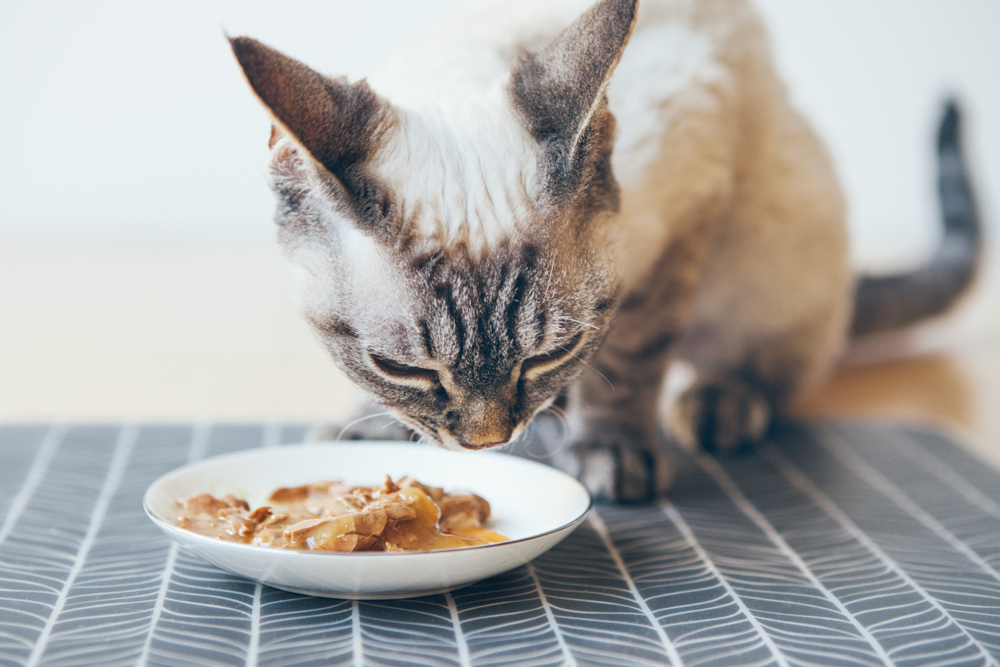
How much your dog or cat should eat changes as they age, and the question usually surfaces once the walks shorten, the naps stretch, and the ribs get harder to find. The amount that kept your dog lean at three is often too much at ten, because activity drops and metabolism slows before the scale shows it. Cats follow a different curve, with needs that fall through middle age and then climb again in the geriatric years, when they absorb fat and protein less efficiently and start quietly losing weight and muscle. Arthritis pain, dental discomfort, and thyroid or other metabolic disease move the target further, often quietly. That is why the number is worth recalculating at each life stage rather than set once.
Star of Texas Veterinary Hospital in Austin sets feeding targets around the pet in front of us rather than the chart printed on the bag, starting with a body condition score alongside the weight and the wellness exams and bloodwork that can flag thyroid or metabolic disease behind an unexplained gain or loss. We also check whether dental pain or stiff joints are affecting how much your pet eats and moves. We can work through portions, treats, and how to transition your older dog or cat onto a new food, with Cat Friendly and Fear-Free handling that keeps weigh-ins calm for our patients. If your dog or cat has slowed down and the bowl has not changed, request an appointment and we will recalculate the target together.
Understanding Calorie Calculators for Dogs & Cats
- A calorie calculator gives you a starting estimate, not a prescription. The right amount is whatever holds your pet at a healthy body condition over the next few weeks.
- Treats, chews, and table scraps add up to more than families expect, and they belong inside the day’s calorie count rather than on top.
- Scoring body condition with your hands catches what the scale misses, since two pets sharing a weight can be built from very different proportions of fat and muscle.
- Weight that changes without a reason deserves a medical workup before a diet change, especially in cats, who can get seriously ill from losing weight too fast.
Why Does the Weight Creep Up When You’re Measuring Every Meal?
The measuring cup isn’t the problem; the number it’s filling usually is. The calorie count on the bag is only the opening estimate for how much to feed, because age, activity, spay or neuter status, and current body condition each move the target, sometimes by a third. Feed the label’s amount to a slower senior and the surplus piles up quietly.
Dry food is also denser than it looks. Most kibble runs 350 to 500 calories per cup, while a 10-pound cat needs roughly 180 to 220 calories a day, well under half a cup. Twenty spare calories a day can mean a pound or two of gain across a year on a small dog.
Calories aren’t the whole story either. Protein does the work of holding onto lean muscle while fat comes off, which matters enormously in senior pets. Fat carries more than twice the energy of protein or carbohydrate gram for gram, so a richer formula shrinks the portion fast. Fiber does the opposite job, filling the stomach without much energy behind it. Our nutritional consultations sort out which of those levers your dog or cat needs pulled.
Do Treats Really Add That Many Calories?
Most of the surplus comes from extras rather than from meals. One ounce of cheddar runs about 110 calories, close to a third of the day’s intake for a 10-pound dog, and calories in treats pile up faster than any other part of a feeding plan.
| Everyday extra | Approximate calories | What it costs |
| One large biscuit-style dog treat | 100 | Roughly a fifth of a 20-pound dog’s day |
| A tablespoon of peanut butter | 95 | As much as a small dog’s entire snack allowance |
| A medium dental chew | 70 to 125 | Often more than a whole training session’s rewards |
| A quarter cup of kibble, scooped just because | 90 to 125 | A quarter of a 10-pound cat’s daily needs |
| Five soft cat treats | 10 to 25 | Up to an eighth of a small cat’s day |
The other issue is arithmetic nobody is doing. A dog in a four-person household can collect four “just one” biscuits before dinner, and every person is telling the truth. Chews handed out to keep a dog busy stack the same way, and chews marketed for dental health are still calories.
Swaps are the easy win, because dogs and cats respond to the moment and the attention, not to the calorie count. Green beans, baby carrots, cucumber slices, and a few pieces of plain air-popped popcorn cost almost nothing and still get the tail going. For cats, a few pieces of their own measured kibble tossed down the hallway beat a commercial treat and double as exercise.
How Can You Tell If Your Dog or Cat Is at a Healthy Weight?
Your hands answer this faster than the scale does. Body condition scoring runs on a nine-point scale where a 4 or 5 is the goal: ribs easy to feel under a thin layer of fat, a waist you can see from above, and a tuck in the belly from the side.
Two cats can both weigh 12 pounds and carry completely different amounts of fat and muscle. A pet who holds steady on the scale while losing lean tissue is not actually doing well, and that pattern shows up often in older cats, where the padding over the spine and hips thins out.
- From above: Look for a waist behind the ribs. An hourglass is ideal, a straight line means extra, and a sharp inward pinch means too little.
- From the side: The belly should slope upward from the ribcage toward the hind legs. A cat’s loose lower belly flap, the primordial pouch, is normal anatomy and not fat.
- With your hands: Run your fingertips across the ribs with light pressure. Ideal feels roughly like the bones in the back of your hand, there but under a thin cover.
| Score | What you see | What you feel |
| 1 to 3, too thin | Ribs, spine, and hips visible from across the room | Bone under the fingers, almost no padding |
| 4 to 5, ideal | Clear waist from above, belly tucks up from the side | Ribs under a thin layer, like the back of your hand |
| 6 to 7, overweight | Waist softening or gone, belly running level | Ribs need real pressure to find |
| 8 to 9, obese | Broad flat back, fat over the hips and tail base, a swinging belly on cats | Ribs hard to locate at all |
Once a month is plenty, and it matters most for the fluffy ones, since a Golden or a long-haired cat can hide two pounds under coat. Come in and we’ll score your dog or cat together during a wellness visit in Austin, so you know exactly what you’re feeling for at home.
Are Online Calorie Calculators Accurate for Dogs and Cats?
Calculators are accurate enough to start with but not perfect. A calorie calculator turns your pet’s current weight and life stage into a daily energy estimate, a number to test for a few weeks rather than trust for life. Individual metabolism varies more than any formula can predict.
- Gather three numbers first: current weight from a real scale, a body condition score, and the calories per cup or per can from the label, printed in the fine print as kcal and not the same thing as the feeding chart.
- Run it twice: once with a treat allowance built into the total and once without, so you can see what the extras are costing in kibble.
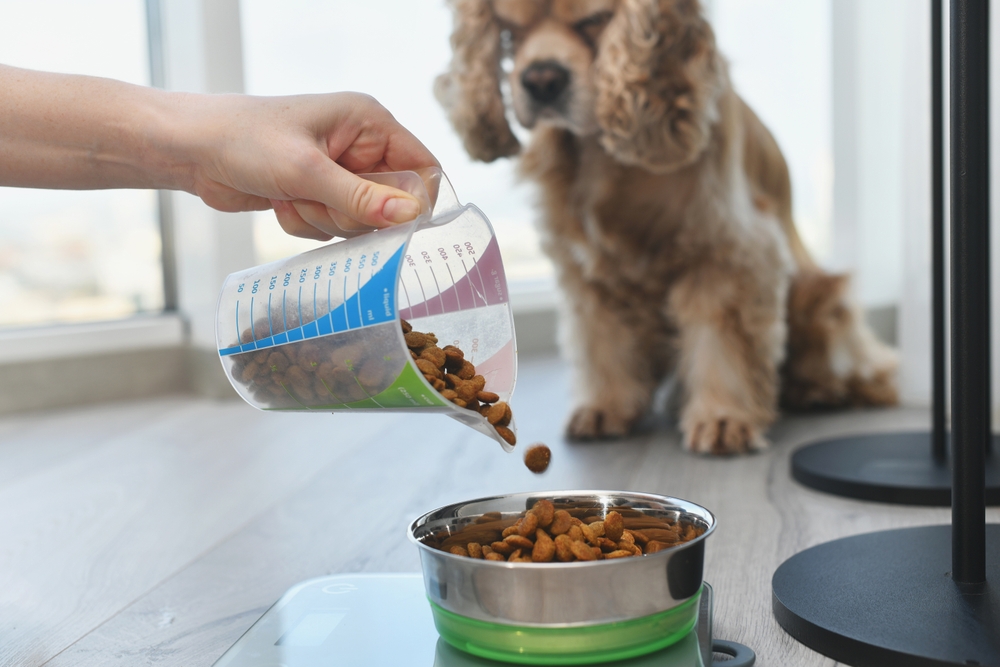
- Weigh, don’t scoop: a kitchen scale set to grams removes the single biggest source of error in the whole plan.
- Recheck on a schedule: reweighing and re-scoring every two to four weeks and adjusting the portion from there is the practical core of obesity prevention.
Targets move with life, too. A dog who hikes the greenbelt every weekend in March is a different dog in an Austin August, when the heat keeps everybody indoors and the daily total should come down to match. If the amount stops working, book a weight check and we’ll adjust from real data instead of guesswork.
What’s the Simplest Way to Keep Treats From Blowing Up the Plan?
Measure the entire day’s food into one container each morning and let that container be the only source of treats. Kibble handed out as a reward comes from the same supply, so nothing lands on top of meals. Whatever’s left at the end of the day goes into the bowl.
What makes this work is that the limit becomes visible. Everyone in the house can see what’s left, and no reward carries guilt because it was always part of the total. Cats do well with the same setup. If you’d like help sizing that container, reach out to us and we can talk it through.
When Should a Weight Change Be Checked by a Vet First?
Weight that moves without a reason deserves a look before the food does. Thyroid disease, kidney disease, chronic pain, dental discomfort, and digestive problems all push the number up or down on their own, and a diet aimed at the wrong problem only delays the real fix.
The workup starts with bloodwork, which we run in-house, plus a urine sample, and we have X-ray and ultrasound on site when the exam points that way. Appetite is worth its own look: a cat leaving half the bowl is often telling you something hurts, and a dental evaluation with dental X-rays finds what the crown of a tooth hides.
Cats need particular care with the pace. Safe weight loss for cats is about one to two percent of body weight per week, a few ounces on a 15-pound cat rather than a pound. A cat who stops eating or drops weight too quickly can develop hepatic lipidosis, a liver condition that turns dangerous within days, so never withhold food to hurry things along or assume hunger will win a standoff over a new diet food. If your cat hasn’t eaten in about 24 hours, call us.
Extra weight isn’t only a number, either. It changes what a body has to handle:
- Metabolic disease: Extra body fat drives insulin resistance, and an overweight cat is several times more likely to develop diabetes mellitus than a cat at an ideal body condition.
- Joints, backs, and urinary tract: Arthritis progresses faster under extra load, and long-backed breeds such as Dachshunds and Corgis face higher risk of intervertebral disc disease when they’re heavy. Heavier, less active pets also drink less and hold urine longer, and urinary stones and bladder inflammation turn up more often in that group.
- Heat tolerance: An overweight dog overheats far faster than a lean one, which matters through an Austin summer where a midday walk already carries risk. Flat-faced breeds have the least margin of all.
Pain and weight feed each other, so comfort belongs in the nutrition plan. A dog who hurts moves less, and one who moves less keeps gaining.
How Do You Keep a Feeding Plan Working for Years?
A feeding plan is a moving target rather than a one-time calculation. Weight, appetite, and activity shift with age, weather, and health. Adult dogs and cats do well with a yearly exam and weigh-in, while seniors and pets working on weight benefit from twice a year.
Between visits, the scale catches drift early, and early is when a half-cup adjustment still fixes it. Stress is the usual reason those weigh-ins get skipped, so we keep them small. A Fear Free happy visit lets a nervous dog or a carrier-hating cat step on the scale, get a fuss made over them, and head home with nothing else happening.
What Makes a Prescription Weight-Loss Diet Different From a “Light” Food?
Not all diet foods are built the same. The prescription versions go through feeding trials, so there’s evidence behind the claim that pets drop fat while holding onto lean muscle. Controlled levels of fiber let a pet feel full on fewer calories, which is much of why a therapeutic formula holds up better than simply serving less of a regular food, where cutting the bag deeply enough to drive real loss cuts the vitamins and minerals right along with it. We’ll match one of the therapeutic diet options to your pet’s other health concerns, since a dog with a pancreatitis history and a cat with early kidney changes need different formulas.
Can Mealtime Do More Than Just Deliver Calories?
A bowl empties in ninety seconds. A puzzle feeder makes that same portion last fifteen minutes and gives a dog something to solve, which cuts the begging that follows a meal inhaled too fast. Scatter feeding and snuffle mats do the same job. Cats want the hunt, so food puzzles, small meals spread through the day, and kibble placed where they have to jump or climb all line up with how they’d eat if they were working for it. Lasting weight loss in dogs comes from pairing a modest calorie cut with more movement, short walks and play sessions added through the week rather than one long weekend outing.
Feeding and Weight Questions Pet Families Ask Us Most
My dog acts starving all the time. Am I underfeeding him?
Constant begging usually isn’t hunger, as long as his body condition score sits at a 4 or 5 and his weight is holding. Some breeds, Labradors and Beagles especially, are wired to behave as though the last meal was days ago. Splitting the same daily total into three servings, using puzzle feeders, adding green beans or plain canned pumpkin for volume, or moving to a higher-fiber food helps more than adding food does. An appetite that increases suddenly and dramatically is a different story, and that one earns bloodwork.
Should I feed less of my pet’s regular food or switch to a weight-management diet?
Trimming the regular bag works for a small adjustment, roughly ten percent, because the nutrients still land in a reasonable range. Deeper cuts start shorting protein, vitamins, and minerals, so pets get hungry and lose muscle along with the fat you wanted gone. That’s the point where a food formulated for reduced calories earns its keep, and which formula fits depends on your pet’s other health issues, so it’s worth a conversation rather than a guess in the store aisle.
The scale hasn’t moved in a month. What now?
Count everything honestly for one week first, including who else in the house is feeding and what’s riding in the training pouch, and weigh meals in grams instead of scooping them. If the totals check out and the weight still won’t shift, we look for a medical explanation; hypothyroidism in dogs is a common one, as are a few medications that slow the metabolism down. From there we lower the target modestly and recheck in two weeks. Steady beats fast.
Setting a Feeding Target You Can Live With
A pet at a healthy body condition moves more easily, faces fewer of the problems that pile on with extra weight, and tends to get more good years out of the ones they have. Saying no to a dog doing his best starving-stray impression is hard, and so is ignoring a cat at five in the morning, but the changes that work are small ones kept up over months rather than dramatic ones abandoned in a week. Schedule a nutrition consultation at Star of Texas Veterinary Hospital in Austin, and bring the food bag or a photo of the label. Our veterinarians certified in Fear Free care will build a plan around the pet you have and the household they live in.