
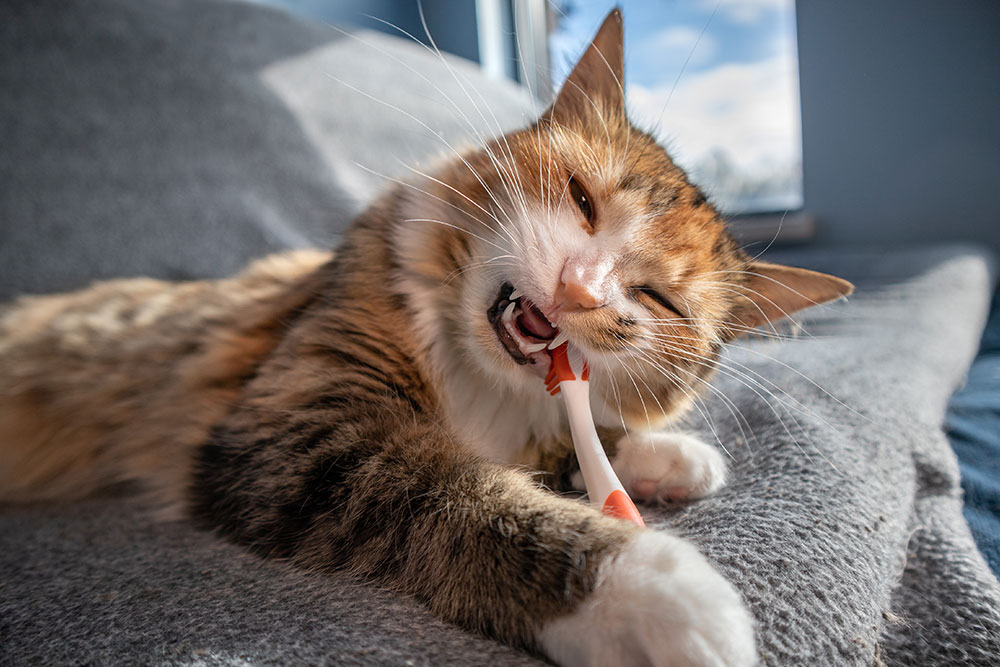
Some dogs and cats will happily let you brush their teeth, and others run at the first hint of the brush appearing. If dental care turns into hiding, wrestling, growling, scratching, or a daily battle neither of you wants, forcing the issue is not the answer. Brushing is one of the best ways to remove plaque at home, but it is only useful if your pet will tolerate it. Depending on your pet, dental chews, treats, diets, wipes, gels, water additives, or a combination of products may give you a much more realistic routine.
At Star of Texas Veterinary Hospital in Austin, we are both Fear Free certified and Cat Friendly certified. We didn’t achieve those certifications just to put a plaque on the wall; it means we care about your pet’s dental health medically, and also think about how to provide that care in the most low-stress way possible. We can help you compare at-home dental products, decide which options are worth adding to your routine, and show you ways to introduce mouth handling gently. We also provide professional dental cleaning, polishing, and extractions for what home care cannot accomplish. If your dog runs when the toothbrush appears or your cat has made it clear that brushing is not happening, bring us your questions. We’re here to help create a plan that doesn’t involve a wrestling match with your pet.
An Overview of Dental Home Care That Works
- Brushing is still the most effective thing you can do at home, and the research points to every other day as the realistic floor rather than once a week.
- A nylon glove, a microfiber cloth, or a dental wipe actually makes a real difference, which matters for cats and for dogs who want nothing to do with bristles.
- Water additives, gels, and sprays do very little alone, but layered onto even modest mechanical care like brushing, wipes, or chews, they help more than mechanical care by itself.
- Nothing done at home removes hardened tartar or treats disease below the gumline, so home care sets the pace between professional cleanings instead of replacing them.
What Happens in Your Pet’s Mouth Between Cleanings?
Saliva, food particles, and bacteria in your pet’s mouth become a sticky biofilm called plaque. Plaque hardens into tartar within a couple of days, and the gumline inflammation it causes is called gingivitis. Early on, that irritation is reversible with the right treatment. Left alone, it moves under the gumline and starts dissolving the attachment and bone holding the tooth in place, known as periodontal disease, and that damage becomes permanent. Chronic infection in the mouth also sends bacteria into the bloodstream, which is why the heart, kidneys, and liver suffer when periodontal disease goes on too long.
Slowing the front end of that sequence is completely doable at home: frequent disruption of the film keeps disease from advancing, which makes routine dental exams and cleaning and your home routine two halves of one job.
Is Brushing Really the Gold Standard, or Just the Default Advice?
Brushing holds the top spot for one reason: it’s mechanical. Bristles physically break up the bacterial film sitting on the tooth, and no enzyme, rinse, or kibble fully matches that. Every other tool is worth using, though none of them quite replicates dragging something across the tooth surface.
How Often Does Brushing Have to Happen?
Brushing frequency is the part most households get wrong: studies show that every-other-day brushing measurably reduced dental deposits across several months, while once-a-week brushing produced no meaningful benefit at all. Daily is the best target. Pick short and frequent sessions over long and rare; fifteen seconds a day beats five minutes once a week without question.
How Do You Start with a Pet Who Hates Having Their Mouth Touched?
Start slower than feels necessary. The objection we hear most, that a particular dog or cat will never put up with this, is usually an introduction problem rather than a permanent fact: pets adapt to daily mouth handling over a few weeks with the right training. Fear Free handling is the same idea we use in our exam rooms, which means short sessions, good food, and stopping before your pet asks you to. Use a pet-formulated or enzymatic toothpaste, never the human kind, which can contain xylitol, fluoride, and foaming detergents that were never meant to be swallowed.
- Touch the outside of the muzzle first: a few seconds while your pet chews something good, then stop while it’s still going well.
- Move to a finger along the gumline: let them lick paste off your fingertip so the flavor starts to mean something.
- Add the brush last: a soft brush or a fingertip brush, a few teeth, and done.
- Keep it short: two quick passes beat one long wrestling match, every time.
Brushing a dog’s teeth goes best with the mouth mostly closed, the bristles angled toward the gumline, and attention concentrated on the outer surfaces where plaque piles up fastest. Brushing a cat’s teeth is the same job at a smaller scale, approached from beside or behind the head with a fingertip brush and kept to a few seconds per side. Skip the inner surfaces in both species; the tongue handles that side reasonably well.
Long sessions, a paste your pet dislikes, heavy pressure on sore gums, and pushing through a struggle are what create a dog who leaves the room when the brush appears. If you’d rather be shown than read about it, reach out to schedule a visit and we’ll go through technique on your own pet.
What Can You Use If a Toothbrush Is a Nonstarter?
Textiles do more to break up the film on the tooth than most families expect. Compared side by side in studies, a nylon glove and a microfiber cloth held their own against a toothbrush for plaque control and gum health, while none of the three touched tartar that had already hardened. For a cat who hates the brush, that’s a real option, not a consolation prize, especially when paired with a toothpaste or enzymatic gel.
What a cloth gives up is reach. Flat outer surfaces come clean easily, while the groove at the gum margin and the teeth way in the back stay hard to get at, and those are exactly the spots where trouble starts. The same rules as toothbrushing apply: daily is best, with every other day being the minimum amount necessary for oral health benefits.
Do Gels, Sprays, and Water Additives Actually Work?
Used after a professional cleaning or in combination with brushes, wipes, or chews, enzymatic cleaners work great. Used alone, they aren’t as effective. Dental sprays, water additives, and enzymatic gels work chemically rather than mechanically, loosening the film on the tooth surface. With no brushing or chewing alongside them, water additives in studies did not significantly reduce dental deposits, but paired with even modest mechanical care they outperformed that mechanical care by itself. Picture biofilm on the tooth as a shield: an antimicrobial enzyme can’t get through an intact one, while a brush, a wipe, or a chew opens the door for it to reach the gumline where it matters.
A daily enzymatic cleaner is what turns a marginal routine into one the evidence supports. Introduce water additives gradually, at partial strength, with a second bowl of plain water available so a picky cat doesn’t quietly stop drinking. If your pet has kidney or bladder disease in their history, ask us before you start.
Can a Dental Diet Take Over Where Brushing Fails?
A dental diet can carry real weight when brushing isn’t happening, though it doesn’t stand in for a brush. Dental diets work two ways, through kibble engineered to shear against the tooth instead of crumbling on contact and through additives that interrupt tartar before it mineralizes. Ordinary food doesn’t clean teeth, whatever the crunch suggests, because a standard piece shatters on first contact and leaves the surface much as it found it. In cats, a properly engineered mechanical-cleaning kibble produced less gingivitis and less tartar than the other approaches tested against it, which is a serious result for a species that refuses brushing more often than not. Diet is also the easiest layer to keep going for pets at higher risk, meaning small breeds and flat-faced dogs with crowded teeth, seniors, and anyone with periodontal disease already on their record.
Which Dental Chews Help, and Which Ones Break Teeth?
A daily dental chew cut gum inflammation and plaque compared with no chew at all when tested in studies, so they are a great addition to a daily routine. Antlers, bones, hooves, and hard nylon head the list of dangerous chew items, and a fractured tooth from one of them is among the most common dental injuries we treat. When choosing the right dental chew, consider these factors:
- The thumbnail test: press a thumbnail into it, and if nothing dents, it’s hard enough to snap a tooth.
- Match the size to the dog: anything small enough to swallow whole is a choking and obstruction risk.
- Introduce one at a time: rich products upset some stomachs, and adding them singly tells you which one did it.
A broken tooth isn’t always obvious. Chewing on one side, dropping kibble, or a new preference for soft toys can be the only clue.
How Do You Choose Products That Actually Work?
VOHC-accepted products have cleared an independent standard for reducing plaque or tartar, which is a different thing from packaging that simply says dental on the front. That seal turns up on chews, diets, gels, wipes, and water additives, so it’s the fastest filter you have in a crowded aisle. The bigger theme running through all of this research is that combinations outperform any single tool. Mechanical care breaks up the film, chemical care reaches the tissue underneath, and covering both sides beats doing either one perfectly.
| Tool | What the evidence supports | Where it fits |
| Toothbrush | Best plaque control, used daily or every other day | The backbone, when your pet allows it |
| Glove, cloth, or wipe | Close to a brush for plaque and gum health | The main mechanical option for brush refusers |
| Dental chew | Measurable drops in plaque, tartar, and inflammation | Daily mechanical care that feels like a treat |
| Dental diet | Less gingivitis and tartar with shearing kibble | A background layer, strongest evidence for cats |
| Gel, spray, or rinse | Chemical help, weaker than mechanical care | Paired with a brush, wipe, or chew |
| Water additive | Little alone, clear benefit when added to mechanical care | The easiest layer to add to an imperfect routine |
Our veterinarians can tell you in about a minute whether something on the shelf earns its place, so bring a label or a photo of one to your next visit. If you find a dental product that shows dramatic before-and-after photos turning a brown tooth to a shiny white one, it’s marketing, not proof. Nothing is going to remove the tartar that already exists and the disease under the gums other than a professional cleaning under anesthesia.

What Can Home Care Never Fix on Its Own?
Home care can’t lift tartar that has already mineralized, and it can’t reach below the gumline, where most periodontal disease lives. That part takes a cleaning under anesthesia: scaling beneath the gum margin, polishing, imaging of the roots, and treatment of whatever turns up.
The catch with an anesthesia-free dental cleaning is that scaling below the gumline and dental radiographs are off the table, so the teeth look whiter while the disease underneath keeps advancing. It also asks a wide-awake pet to hold still for strangers with sharp instruments near sensitive tissue.
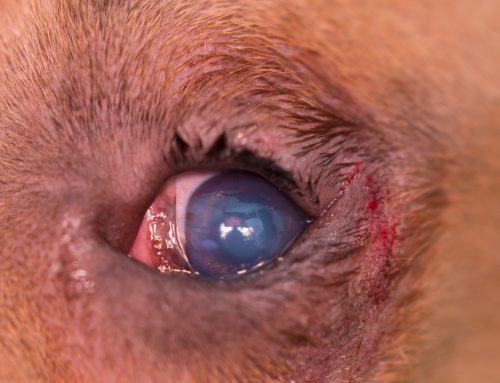
About two-thirds of every tooth sits out of sight, and dental X-rays are how we see it. Ours run alongside cleaning, polishing, and extractions under anesthesia, so a painful root doesn’t get missed under a crown that looks fine. How often your pet needs that depends on size, breed, age, and what the last exam found. Bleeding gums, breath that changed suddenly, food falling out of the mouth, pawing at the face, or swelling below an eye all mean they need to be seen promptly.
Common Questions About Dental Home Care
Can I use baking soda or coconut oil instead of pet toothpaste?
Neither one does the job. Baking soda is alkaline, tastes unpleasant to most pets, and can upset a stomach. Coconut oil has no meaningful effect on plaque, can cause diarrhea, and adds calories that matter quickly in a ten-pound dog. Flavor is what keeps a pet cooperating through a session, so a poultry or malt paste made for animals is worth the few dollars.
When should we start dental care with a puppy or kitten?
As soon as they’re settled at home. Baby teeth fall out regardless, so the goal isn’t cleaning them, it’s teaching a young pet that tooth brushing isn’t scary. Lift a lip, count a few teeth, offer a lick of paste, then stop. A puppy or kitten raised that way rarely becomes an adult who fights a toothbrush, and those early mouth checks help us catch retained baby teeth and bite problems while they’re still easy to address.
My pet’s breath still smells even though I brush every day. What now?
Persistent odor despite good home care usually points to something a brush can’t reach: an infected pocket under the gum, a fractured tooth, or a resorptive lesion, which is a painful defect common in cats. Kidney disease and some digestive problems change breath too. This is an exam question rather than a stronger-product question. We can look, take dental X-rays if the picture calls for it, and tell you what you’re smelling instead of guessing at it.
Pick One Thing and Start This Week
You don’t need the whole routine this week. Pick the one thing your pet will tolerate, whether that’s a wipe, a chew, or an additive in the water bowl, then add the next layer once your pet is comfortable with the first. If brushing is the goal, we’d rather help you build up to it slowly than watch it turn into a fight nobody wins. Bring us your most opinionated dog or cat, and schedule a dental exam at Star of Texas Veterinary Hospital in Austin whenever you’re ready to build a plan around them.