
Most dogs and cats do best with a quick look in the ears about once a week, while cleaning runs on a separate schedule and a healthy canal often needs none at all. Wax is protective, and washing out a normal ear dries the skin and creates the irritation you were hoping to prevent. Austin keeps dogs in the lake from March into October, and cedar season drives allergy flares through the winter, both of which push inflammation into the ear canal. Swimming, allergies, floppy or hairy ears, and a history of infection are what move your pet onto a shorter cleaning schedule.
Star of Texas Veterinary Hospital is Austin’s first Fear Free certified practice, and we want ear care both at home and in the hospital to be a stress-free experience. Our Happy Visits give a nervous dog or cat time in the building with treats and games, without any handling or exam. Victory Visits pick up from there, building toward ears that can be held and checked without a fight. At a wellness exam we go over both ears, treat anything brewing, and show you what healthy smells and looks like so your weekly check takes seconds. Ear risk is individual, so ask us to build the schedule that fits your pet.
What a Weekly Ear Check Actually Takes
- A weekly look and sniff catches most ear problems while they’re still small, cheap, and comfortable to treat.
- Healthy ears usually need no cleaning at all, and scrubbing a normal canal strips the wax that’s protecting it.
- Pain, swelling, bleeding, a foul smell, or a sudden head tilt mean the ear needs an exam before anything goes into it.
- Swimming, allergies, heavy ear flaps, and past infections are what put a pet on a regular cleaning schedule.
Why Do Dogs and Cats Get Ear Trouble So Often?
The ear canal in dogs and cats makes an L-shaped turn before it reaches the eardrum. Moisture and debris settle at the bend instead of draining out the way they do in people. Add body heat, a flap lying over the opening, and very little airflow, and you’ve got a warm dark pocket where yeast and bacteria thrive.
Heavy pendulous flaps on a Hound or a Spaniel cut off ventilation. Poodles, Doodles, and Schnauzers grow hair down inside the canal that holds damp debris against the skin. Some breeds, and plenty of cats, have narrow canals that hang onto wax. Allergies sit underneath a large share of itchy, inflamed ears. A dog who scratches at the same ear every spring usually has a skin problem showing up in the ear canal.
Ear mites are common in young cats and in any kitten from a crowded environment, and they spread easily to other pets in the house. None of this is one-size-fits-all. Our Austin veterinary exams include a look at the shape of your pet’s canal, the hair in it, and what their skin is doing everywhere else before we recommend a routine.
What Am I Looking For When I Check My Pet’s Ears?
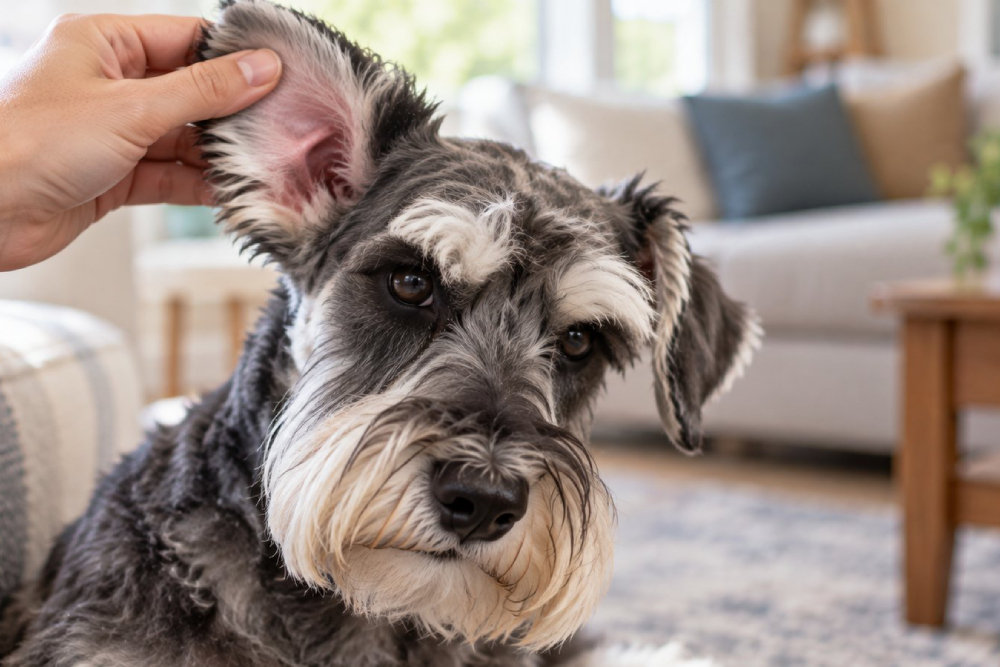
Start with good light. Lift the flap, look at the skin lining the opening, then put your nose close and breathe in. You’re building a baseline more than hunting for disease, and once you know what your own pet’s normal ear looks and smells like, you’ll notice the week something changes.
Most dogs and cats tolerate this fine once it’s predictable. Pairing the check with a treat and stopping before your pet gets uncomfortable is the whole idea behind cooperative care, and pets taught this way often lean in and offer an ear instead of ducking away. For the dog or cat who has already decided ears are off-limits, Fear Free handling changes the equation, and for true panic we can add behavioral medicine rather than wrestling through it twice a month.
Things that mean the ear needs a professional look:
- Head shaking or a tilt: Repeated shaking, or a head held at an angle, says something in there is bothering them.
- Scratching and pawing: Digging at one ear, or dragging that side of the face along the rug and the sofa arm.
- Redness, swelling, or heat: The flap or the canal opening looks angry or feels warm compared with the other side.
- Discharge: Brown crumbly material, yellow or green goo, or anything bloody.
- Odor: A yeasty, sour, or frankly bad smell, which is often the very first change families notice.
- Pain: Yelping, pulling away, or a pet who used to love ear rubs and suddenly doesn’t.
Any of those, or a pet who’s just gone quiet and unlike themselves, is reason to request an appointment rather than wait out the week.
How Often Do Ears Need Cleaning, Really?
Every dog and cat benefits from that weekly look, but cleaning runs on its own schedule. Ears with no odor, no debris, and no history of infection often need nothing at all. Pets who do need cleaning usually do well with a session every few weeks, plus one after a swim or a bath.
What a Reasonable Schedule Looks Like
| Your pet’s situation | How often to look | How often to clean |
| Healthy ears, no history of infection | Weekly | Rarely, and only if we’ve asked you to |
| Swims most weekends | Weekly | After each swim, with a drying solution |
| Floppy flaps or hair in the canal | Weekly | Every two to four weeks, or as directed |
| Seasonal allergies | Twice weekly during flare season | On the plan we set for that season |
| Cats with normal ears | Weekly look and sniff | Almost never, unless directed |
More is not better. Over-cleaning dries the canal lining, strips the wax layer that keeps organisms in check, and leaves skin irritated enough to itch on its own. If you’re cleaning weekly because the ear keeps filling back up, that’s a medical problem rather than a hygiene one, and it needs a different answer.
Which Pets Need a Closer Eye?
Allergy dogs top the list, along with weekend swimmers, pets with hormonal disorders like Hypothyroidism or Cushing’s disease, breeds carrying heavy flaps, and any pet who has already had two or three infections. The third infection in a year is rarely bad luck. A veterinarian who knows your pet’s history can look at the pattern, the season, and the organism and aim at the cause instead of the symptom. Chronic ears are usually a skin disease wearing a disguise, and our dermatology care goes after the allergy underneath rather than treating the same flare four times a year.
When Should I Leave the Ears Alone and Call Instead?
Pain, swelling, bleeding, or a sudden head tilt all fall squarely into when not to clean ears at home, because flushing liquid into an inflamed canal drives debris and bacteria deeper instead of rinsing them out. A hot, foul-smelling ear needs a diagnosis before it gets a cleaner.
Left to simmer, otitis externa thickens and narrows the canal until medication can no longer reach the tissue, and the fix becomes surgical rather than medical. That takes months of neglect rather than days, and early treatment keeps nearly every case in the medical column.
Some signs move past the ear entirely. A head tilt, stumbling, or a drooping eyelid on one side points toward otitis media and interna, where infection has reached the middle or inner ear and the problem is neurologic. Pets in that spot are often unsteady and nauseated, and they need to be seen rather than treated at home.
A few rules hold for any sore ear. Never put a cotton swab down the canal. Never flush an ear that’s painful or bleeding. Skip hydrogen peroxide, and skip anything already open in your own medicine cabinet. An ear flap that swells into a firm pillow after days of shaking is an aural hematoma: blood pooled inside the flap. That needs an exam, not a home attempt at draining it. If you’re unsure which side of the line your pet is on, call or text us and describe what you’re seeing.
How Do I Clean My Pet’s Ears Without Making It Worse?
Cleaning a dog’s ears works from the inside out: fill the canal with solution, massage the base for twenty or thirty seconds while you hear a soft squish of the fluid, let your dog shake it all out, then wipe away only what you can see. Cotton balls or soft gauze only, never a swab.
Setup does most of the work. Pick a room where nobody’s cornered, have treats out before the bottle appears, and feed a few during the massage rather than only at the end. Two short sessions beat one long argument, and if your dog is pulling away hard, stop and try again tomorrow. Puppies who get their ears handled early rarely fight it as adults, so start early and make it fun.
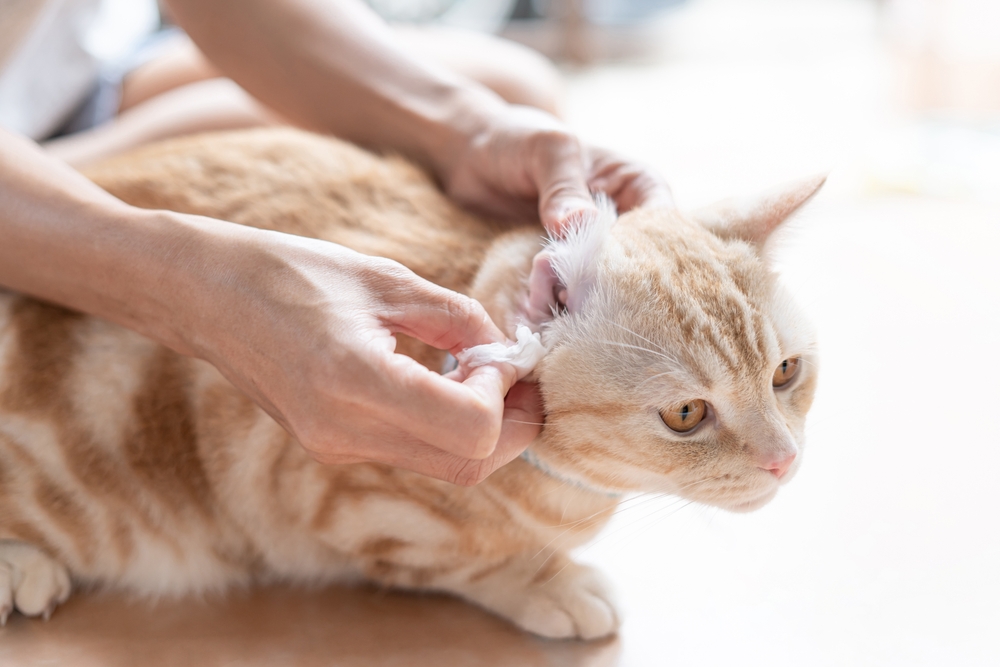
Cats are a different job. A healthy feline ear is pale pink and nearly wax-free, and cleaning a cat’s ears should happen rarely, gently, and only after a veterinarian has said the ear needs it. Warm the bottle in your hand first, keep sessions to a few seconds, and quit at the first tail flick instead of pushing to finish. If you’d rather watch it done once, ask at your next visit and we’ll show you on your own pet.
Is the Ear Cleaner From the Pet Store Aisle Safe?
Picture the scene. Your dog has been shaking his head since Tuesday, the pet store is on the way home, and the shelf holds a dozen bottles that all promise relief. Some of them are fine. A few will make a sore ear scream. The front of the box won’t help you sort them, because nobody polices the words “gentle” and “natural” on a pet product, and either one can sit right above an ingredient that burns. The ear itself, not the label, should decide what goes in it.
Ingredients That Turn a Sore Ear Into a Worse One
| What goes wrong | The ingredient behind it |
| Made for a person’s canal, with the wrong pH | Human ear drops or wax removers |
| Poisonous to cats, and inflamed skin soaks them straight in | Tea tree and other essential oils |
| Acid against raw or ulcerated skin, and it bites hard | Vinegar or apple cider vinegar |
| Foams on contact, inflames the tissue, and leaves the canal wet afterward | Hydrogen peroxide |
| Scalds broken skin and pulls the moisture out of the lining | Rubbing alcohol |
Deafness is the worst-case ending, and it starts with a torn eardrum you had no way of seeing from outside. An ingredient that does nothing to an intact drum can do permanent harm once it slips through into the middle ear. That one unknown is the strongest argument for letting us look before anything goes in.
What Should Go in the Ear Instead?
It depends on what the ear is doing, and that’s the question we’re answering before we hand you a bottle. A veterinary cleaner is formulated at the pH a dog’s or cat’s skin expects, and it pairs a mild surfactant that loosens debris with a drying agent that makes the canal a less inviting place afterward. The right pick for an allergy ear can be the wrong pick for an active infection, and neither suits a canal that’s already damaged. Under the microscope, ear cytology separates yeast from cocci from rod-shaped bacteria, three organisms that look identical to the eye and call for three different medications. We stock cleaners to match what that swab shows.
What Should I Do After My Dog Swims?
After a swim or a bath, getting water out of the ears means towel-drying the flap, letting the canal air out before bedtime, and reaching for a veterinary drying solution when your dog swims most weekends. Water pooled at the bend of the canal is exactly what yeast wants.
Austin makes this a nine-month conversation. Between Barton Springs, the greenbelt, and every backyard pool in the neighborhood, plenty of local dogs are wet several times a week from spring through fall, and our humidity means ears dry slowly even after a towel. Propping the flaps back for twenty minutes after a swim helps more than it sounds like it should. For dogs who swim constantly, neoprene ear bands are worth a try, and a rinse with fresh water after lake days keeps grit out of the canal. Keep the towel to the outside of the ear, wiping only where you can see.
What Does an Ear Exam Catch That a Home Check Can’t?
An otoscope reaches past the bend your eyes can’t see around, down to the eardrum itself. That view tells us whether the drum is intact, how inflamed the deeper portion of the canal is, and whether something is physically lodged in there.
The bigger payoff is finding what’s driving the problem. Ears that keep flaring are almost always a symptom of something else:
- Allergies: Environmental and food allergies are the leading reason ears recur, often with itchy paws and a red belly alongside.
- Foreign material: Grass awns and seed heads work their way in fast during a hike, and they cause sudden, dramatic one-sided pain.
- Parasites: Ear mites produce dark crumbly debris and intense itching, most often in kittens and young cats.
- Growths: Inflammatory polyps in cats and benign masses in older dogs can block a canal and trap infection behind them.
- Hormonal disease: Hypothyroidism in dogs and Cushing’s disease change the skin’s defenses and let ear infections take hold.
Treating the infection without treating what caused it buys a few good weeks. Ears get checked at every one of our physical exams, because that’s how we spot the pattern while it’s still a flare instead of a chronic problem.
Ear Care Questions Pet Families Ask Us Most
Can I use a cotton swab if I’m really careful?
Please don’t use a cotton swab in the canal, even carefully. The canal turns a corner. A swab pushes wax and debris around that bend and packs it against the eardrum rather than pulling it out, and it scrapes skin that may already be inflamed. Cotton balls, gauze squares, or a soft cloth on the visible part of the ear will get everything you can safely reach, and the solution plus a good head shake handles the rest.
How do I tell ear mites from an infection?
Both itch and both make a mess. The honest answer is that you often can’t tell by looking. Mites classically produce dry, dark, coffee-ground debris in both ears with fierce scratching, and they’re far more common in kittens and cats from group housing. They also spread to other pets at home, which an ordinary yeast infection won’t do. A quick sample under the microscope settles it, and the treatment for one does nothing for the other.
Why does my dog keep getting the same ear infection?
Recurrence usually means one of two things: the underlying cause was never addressed, or the last course stopped early. Allergies are the most common culprit, and an ear treated without managing the allergy will flare again within weeks. The other frequent issue is a medication stopped when the ear looked better rather than when it was finished. A recheck exam tells us whether the canal is truly clear, which is worth far more than guessing from the outside.
Getting Your Pet’s Ear Routine Right
Good ear care is less work than it sounds: a weekly look, a sniff, and a cleaner you reach for only when there’s a reason. If your pet is the one whose ear flares every spring, recurring infections are a puzzle we’d rather solve with you and prevent rather than treat with another round of drops after infection sets in. Star of Texas Veterinary Hospital cares for dogs and cats here in Austin, and you can book your pet’s next wellness visit or send a question about what you’re seeing in the ear any time.