
ACL Tears in Dogs: What a Cruciate Injury Means for Your Pet
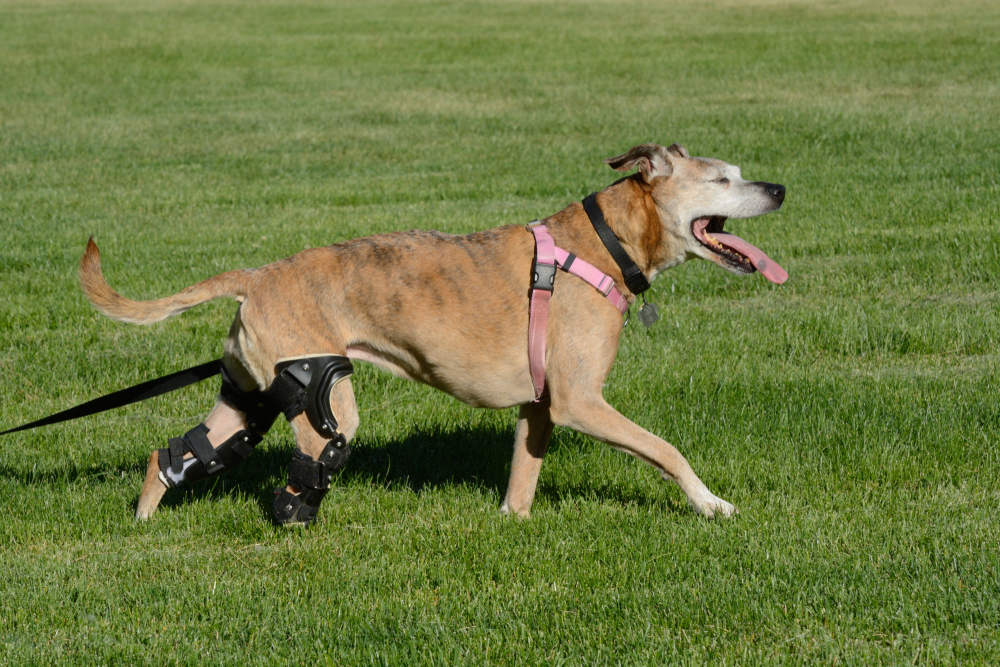
You know that moment when your dog launches after a squirrel and suddenly pulls up short, holding a back leg off the ground? Or maybe it’s been less dramatic: a persistent limp after walks that rest doesn’t seem to fix. Both can be signs of a cranial cruciate ligament (CCL) tear, the dog version of the ACL injury you hear about in athletes. The CCL keeps the knee stable during movement, and when it’s damaged, the joint becomes painful and progressively unstable, leading to cartilage damage and arthritis over time.
Star of Texas Veterinary Hospital makes orthopedic evaluations as low-stress as possible for your dog, using Fear Free certified methods. We confirm CCL injuries through careful exam and imaging, then discuss surgical options with you in plain terms so you can make the best decision. For advanced orthopedic procedures, we partner with the board-certified surgeons from Violet Crown Veterinary Specialists, who perform surgeries right here in our facility so your dog never has to leave a team they know. Request an appointment or contact us if your dog has been limping.
What the CCL Does and Why Tears Happen
Understanding the Injury
The cranial cruciate ligament runs diagonally inside the knee joint and is the primary structure preventing the tibia from sliding forward relative to the femur during movement. When it tears, that forward sliding happens with every step. The result is a knee that grinds on itself continuously, causing pain and accelerating joint damage.
Most canine cruciate ligament injuries are not the dramatic single-event tears that human athletes experience. In dogs, they typically represent the end of a gradual degenerative process: the ligament weakens over months or years, then a final awkward movement completes what was already underway.
Austin’s active dog culture means plenty of opportunities for the activities that put knees at risk. Town Lake trail runs, off-leash park sessions, and weekend hike-heavy schedules are all part of life here, and the kinds of sudden pivots and terrain changes that stress cruciate ligaments come with that territory.
Factors that increase CCL injury risk:
- Sudden directional changes or twisting motions at high speed
- Inconsistent activity patterns where a dog rests most of the week then runs hard on weekends
- Excess body weight, which amplifies joint stress with every stride
- Breed predisposition: Labrador Retrievers, Rottweilers, Boxers, and Golden Retrievers carry higher baseline risk
- A prior partial tear that was not identified and progressed over time
Our services include nutrition counseling, which is one of the most practical long-term protections for at-risk joints. Keeping weight in an optimal range makes a meaningful difference in both injury risk and recovery outcomes.
Signs Your Dog May Have Torn Their CCL
What to Watch Between Exam Appointments
CCL injuries do not always look the same. Some dogs suddenly refuse to bear weight and the problem is obvious. Others develop a limping pattern that improves briefly with rest before returning as soon as activity resumes, and owners may attribute it to a minor sprain for weeks.
Signs that point toward a CCL injury:
- Hind-leg lameness that is clearly worse after exercise and does not fully resolve with rest
- Visible swelling or thickening on the inner aspect of the knee
- Reluctance to jump, climb stairs, or rise from lying down
- Sitting with the affected leg extended out to the side rather than tucked
- A toe-touching gait where the foot barely contacts the ground
- Muscle atrophy in the affected leg compared to the other side
The key distinction from a sprain: a sprain improves meaningfully within a week of rest. A CCL injury does not. If the limp returns every time your dog is active, an evaluation is the appropriate next step.
How We Diagnose CCL Injuries
Examination and Imaging With Minimal Stress
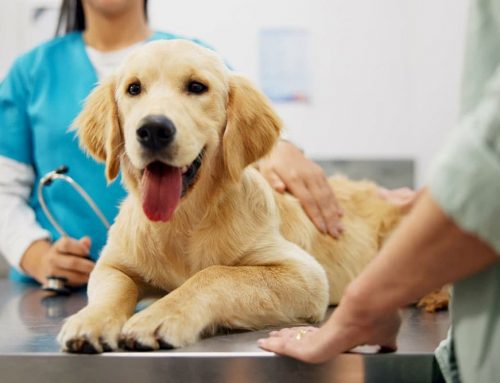
For a dog already in pain, a veterinary exam that adds more anxiety is genuinely counterproductive. Our Fear Free approach means orthopedic evaluations are designed to keep your dog as calm and comfortable as possible: we use treats, slow movements, and patient technique, and can perform portions of the exam in positions that feel less threatening for dogs who are already hurting.
The orthopedic exam includes the drawer sign and tibial thrust test, which assess how much the tibia slides relative to the femur when controlled pressure is applied. Light sedation is sometimes needed for an accurate exam, particularly for dogs who are painful or very tense, and we approach that decision with the same low-stress philosophy.
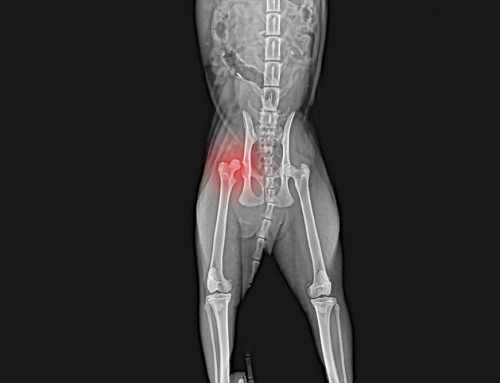
X-ray diagnostic imaging assesses secondary joint changes: fluid accumulation, early arthritic remodeling, and bone spur formation that indicate how long the instability has been present. For complex cases requiring detailed soft tissue assessment, MRI provides a view standard radiographs cannot match.
Why Rest Alone Won’t Fix This
Rest temporarily reduces pain by reducing how often the unstable joint is loaded. It does not repair the torn ligament, and the underlying instability continues causing damage throughout the rest period.
The consequences accumulate: arthritis develops rapidly in an unstable joint and is permanent and progressive, the meniscus is at high risk of tearing from abnormal loading, and the longer surgery is delayed the more arthritis is present when it is eventually performed. If your dog is limping, early evaluation rather than extended observation is the better choice for their long-term joint health.
Is Conservative Management an Option?
For very small dogs under about 15 pounds, the biomechanics of the knee allow some patients to achieve functional stability through fibrous tissue formation with strict rest over several months. For these dogs, a conservative management conversation is appropriate.
For medium, large, and giant breed dogs, the evidence consistently shows that surgery produces better long-term outcomes. The joint rarely stabilizes without surgical intervention at those sizes, and arthritis progresses regardless of how much rest is provided. Contact us to discuss what makes sense for your dog’s size, age, and overall health.
Surgical Options: TPLO and Extracapsular Repair
Surgery restores mechanical stability to the knee and slows arthritis progression. At Star of Texas, advanced orthopedic procedures are performed by a board-certified surgeon from Violet Crown Veterinary Specialists, right here in our surgical suite. We handle all pre-operative care and preparation, the surgeon performs the procedure on a scheduled day, and we manage your dog’s recovery and six-week recheck. Your dog gets specialist-level orthopedic care without the added stress of an unfamiliar facility.
If you want to go deep on the procedure before your appointment, the TPLO Austin resource covers the injury, the surgery, and the recovery process in detail, and includes a six-step video series that walks through the entire process from diagnosis to return to activity.
The two main procedures:
TPLO (Tibial Plateau Leveling Osteotomy): TPLO surgery changes the geometry of the tibial plateau so normal walking forces no longer require an intact CCL to maintain stability. The tibial surface is cut, repositioned, and secured with a bone plate. TPLO is the most widely recommended procedure for active dogs and medium to large breeds, with consistently strong long-term outcomes.
Extracapsular Repair (Lateral Suture): A strong synthetic suture placed outside the joint stabilizes the knee while fibrous tissue develops. Better suited to smaller or less active dogs where bone-modifying surgery is not indicated.
Recovery: What It Actually Takes
Surgery addresses the instability. Recovery is where function comes back. Rehabilitation after CCL repair includes controlled leash walking, hydrotherapy, and progressive therapeutic exercise to rebuild the muscle strength and range of motion that surgery alone does not restore. A structured plan matters as much as the procedure itself.
General recovery milestones:
| Timeframe | Activity Level |
| Weeks 1-2 | Crate rest; leash only for bathroom; incision monitoring |
| Weeks 3-4 | Short, slow leash walks beginning |
| Weeks 5-7 | Progressively longer walks; no running or jumping |
| Week 8+ | Six-week recheck at Star of Texas; off-leash discussed based on healing |
For a thorough look at what to expect at each stage, including how to care for the incision, specific activity restriction recommendations, and videos showing normal leg use in the days after surgery, the TPLO Austin site is an excellent reference.
Crate Rest: Getting Through It
Honest advice: crate rest with an active Austin dog is hard. Here is what actually helps:
- Keep the crate visible within household activity so your dog does not feel isolated
- Use food puzzles and stuffed toys for mental engagement without physical activity
- Take slow, short leash sniff walks within the allowed parameters
- Maintain a predictable daily schedule
Surviving crate rest with your dog requires realistic expectations and preparation. The e-collar (cone) stays on during the entire recovery to protect the surgical site. The first two weeks are the most critical and the hardest to hold the line; setbacks during this window can require a second procedure.
Protecting the Joint Long-Term
Daily Habits That Matter
Warm-ups and cooldowns before and after any activity reduce injury risk during recovery and beyond. A five-minute slow walk before exercise is not optional for a recovering knee, it is protective.
Weight control is one of the most controllable factors in long-term joint outcome. Every pound above ideal weight increases load on the repaired knee, accelerates arthritis, and raises the statistical risk of injuring the opposite leg within two years. In Austin’s warm climate where dogs can exercise year-round, keeping weight optimal is both possible and important.
Dog hip and joint supplements support cartilage health and comfortable joint movement during recovery and ongoing. Ask our team which formulation is appropriate for your dog’s size and recovery stage.
Frequently Asked Questions
Can my dog recover without surgery?
Very small dogs occasionally achieve functional stability through rest. For medium and larger dogs, surgery consistently produces better long-term outcomes. Delaying surgery allows progressive joint damage.
Will the other leg be at risk?
The risk is real: studies suggest 40 to 60 percent of dogs with one CCL rupture injure the opposite leg within two years. Weight management and consistent conditioning reduce but do not eliminate that risk.
What does the full process look like from diagnosis to recovery?
The TPLO Austin FAQ covers the entire continuum from pre-surgical preparation through post-operative care and rehabilitation in one place. It is a useful resource to review before your consultation or surgery day.
What is recovery like?
Most dogs reach their six-week recheck in good shape and can begin progressive off-leash activity from there. Full strength recovery continues over the following months. Following the recovery protocol carefully is the biggest factor in how well and how quickly dogs return to normal.
How does the surgeon partnership work?
We handle all pre-operative workup, preparation, and the six-week recheck after surgery. The board-certified orthopedic surgeon from Violet Crown Veterinary Specialists performs the procedure here in our surgical suite on a scheduled day. Your dog gets specialist-level care without leaving a familiar environment, and our team manages continuity of care throughout.
Getting Your Dog Back to the Life They Love
CCL injuries are serious but highly treatable when addressed thoughtfully. The dogs that do best are the ones whose families catch the signs early, pursue an accurate diagnosis, choose a procedure matched to their dog’s needs, and follow through on structured recovery. At Star of Texas Veterinary Hospital, we approach every part of that process with the Fear Free care your dog deserves: less stress, more trust, and better outcomes for everyone.
If your dog has been limping or showing any of the signs above, request an appointment or call us at 512-291-1600. Our team is here to help.